

Ultimate Guide to Hotel Brands & Hotel Chains Worldwide
Choosing a hotel brand that is right for you can make all the difference in your stay and travel experience. There are countless Hotel brands and Hotel chains across the globe, whether you’re traveling for business, leisure or on a budget. Finding the perfect hotel accommodation for you can be very difficult. This guide breaks down the key players in the hospitality industry. from established luxury brands to reliable budget options. Whether you’re a frequent flier looking for elite treatment or a first-time mover looking for the best value. this guide will help you navigate the hospitality world with confidence. Let us explore the best hotel brands and find your ideal accommodation! Choose to upgrade your loyalty program and enjoy excellent benefits to make your trip more comfortable and perfect.

What Are Hotel Brands and Hotel Chains?
Hotel Brands:
“Hotel Brands” refers to a hotel or a unified name, logo, identity, etc. It can be an independent entity or part of a hotel group. (For example, Marriott and Hilton also have many luxury, mid-, and budget hotel brands.)
Hotel Chains:
“Hotel chains” refers to a company that directly owns or controls many hotels. which requires investment management to operate many brands. Such as the early Holiday Inn, as well as some local hotel groups directly invested in several stores and so on.
Main distribution:
- Hotel Brands pays more attention to the guest experience, service is the priority, and the hotel theme is rich and diverse. to provide travelers with loyalty programs, and provide high-quality benefits.
- Hotel chains are general companies that own or manage many brands.
- A single hotel chain can operate many brands to meet the needs of different customer groups.
Independent hotel Brands vs hotel Chains
First of all, independent hotels are hotels that do not belong to large hotel groups or hotel chains. They usually adopt a unique hotel brand and management style, and have more flexibility in design, pricing. and service experience. For example, some famous luxury independent hotels include the Peninsula Hotel or the Raffles Hotel (before it became an Accor hotel).
In contrast, Hotel chains generally belong to a large group, and they all have to manage many hotels under a unified brand and operation. These mainly enjoy shared marketing, centralized booking systems. and loyalty programs that ensure standardization of services and facilities across different locations. Examples include Hilton Hotels & Resorts and Intercontinental Hotels Group’s Holiday Inn.
| Brands often operate with assets | Hotel Brands | Hotel Chains |
|---|---|---|
| Ownership | Limited flexibility due to the strict brand | Chains typically own |
| Management Model | Mainly operates through | Primarily self-managed with |
| Expansion Speed | Rapid expansion by leveraging investment | Slower growth |
| Flexibility | Offers unique designs and high-quality service | Limited flexibility due to strict brand |
| Brand Recognition | Relies heavily | Well-known globally with strong brand recognition. |
| Consistency | Varies depending | Highly standardized across different locations |
| Booking & Marketing | Dependent on local marketing efforts and Online Travel | Uses centralized booking |
The Evolution of Hotel Chains
The evolution of Hotel chains is a process from an independent operation to a global organization. which has experienced many stages of development, involving the business model, brand strategy, and the process of change. Over time, the hotel industry has shifted from a traditional ownership model to a franchise model. This evolution has been mainly divided into three key stages, namely: the early development of large hotel groups. large-scale integration expansion through acquisitions. and the rise of lifestyle and select brands, so that people staying in hotels have further experience improvement on the hotel’s operating model and accommodation experience.
1. Early development of various hotel groups.
At the beginning of the 20th century, Hotel chains came into being to provide standardized accommodation for many travelers. But for guests, a good brand reputation is worthy of affirmation, no matter where they are. They expect to receive the best quality service and accommodation. Some hotels make a critical start in the early days by focusing on building consistency. customer loyalty, and an efficient operating model. Here are some examples:
- Hilton (1919): Originated in Texas and later became a global luxury brand.
- Marriott (1927): Originally a root beer stand, it later focused on business hotels.
- IHG (1946): Founded by Pan American Airways to serve international passengers.
- Accor (1967): Founded Novotel Hotels in France and expanded throughout Europe.
- Hyatt (1957): The first hotel near Los Angeles International Airport that later became a leader in luxury travel.
- Radisson (1960): Originated with the opening of the first Radisson hotel in Minneapolis and later grew into a global hotel group with brands spanning upscale, luxury, lifestyle, and resort segments.
2. Expand through franchising and industry consolidation.
After decades of evolution, Hotel Brands has found a commercially scalable franchise model. Many hotel groups have moved to an asset-light strategy. where independent owners operate hotels under brand names and standards.
This is what we often call the brand licensing its name and management system to independent hotel owners. Owners then pay initial fees and ongoing royalties in exchange for marketing, booking systems. and loyalty program access.
This model accounts for more than 67% of hotel chains in the United States. allows brands to grow quickly with minimal capital investment. At the same time, mergers and acquisitions have reshaped the hotel industry. A small but large number of multi-brand groups now dominate the industry. And by consolidating acquisitions, a handful of large groups now control most of the world’s hotel supply. As recently as the early 2000s, there were more than 20 major hotel chains in the United States, and today, just 10 companies control 65 percent of hotel rooms.
Here are some of the first major acquisitions by major hotel groups:
- Marriott acquired Starwood in 2016 and added the St. Regis and W hotels.
- Hilton acquired DoubleTree & Hampton in 1999, expanding its selection of mid-range hotels.
- Accor acquired Fairmont and Raffles in 2016 and strengthened its luxury brands.
- IHG acquired Kimpton in 2014 and chose to move into the boutique hotel market.
- Wyndham acquired La Quinta in 2018 and has grown in the budget hotel segment.
- Jin Jiang International acquired a majority stake in Radisson Hotel Group in 2018, strengthening its global presence and expanding its portfolio of international hotel brands.
Why the shift?
For us travelers, this gives us more choice, but it also leads to overlapping brand identities. Sometimes, it makes it harder to distinguish between mid-range and high-end hotel offerings. As some people have wondered before, is Hilton part of Marriott? Is Wyndham Part of Marriott? But, for hotel owners, being able to cooperate with large brands has greater marketing advantages and stronger distribution capabilities. But it will also bring relatively large competition. and may also be subject to competition from other sister brands of the hotel chain in the same city.
3. The rise of lifestyle and boutique brands.
As travelers seek personalized and unique experiences, some hotel groups have gone beyond traditional business models and luxury brands. And some have launched boutique hotels that have been redesigned and connected to local culture and lifestyle.
| Hotel Group | Lifestyle & Boutique Brands |
|---|---|
| Marriott | W Hotels, Edition, Moxy |
| Hilton | Canopy, Curio Collection |
| Hyatt | Thompson, Andaz |
| Accor | SO/ Sofitel, Mama Shelter |
| IHG | Kimpton, Vignette Collection |
| Radisson | Radisson RED, art’otel, Radisson Collection |
There are many reasons for the rapid rise of these boutique hotels. Some travelers like to share their stay experiences on various platforms and social networks. so that more people have a quick understanding of them. And compared with traditional luxury hotels, young people may pay more attention to design, fashion sense, social space, and a good experience.
Modern Trends in the Hotel Industry
The hospitality industry is growing rapidly in response to changing traveler expectations. Advances in technology and virtual business models. It focuses on segmenting key customer needs, leveraging loyalty programs. and asset-light strategies to drive growth and efficiency. Here are some detailed descriptions.
1. Hotel differentiation:
To meet the needs of different travelers, some Hotel Brands divide their hotels into three categories: luxury, mid-end, and economy. For example, luxury hotels such as the Ritz-Carlton and Waldorf Astoria offer a premium experience with personalized service and top-notch amenities. Mid-range hotels such as Hilton Garden Inn or Courtyard by Marriott combine comfort and economy. appealing to both business and leisure travelers. Budget hotels, such as Motel 6 or Ibis Budget, focus on providing basic services at a low cost. targeting budget guests who value economy over luxury. This segmentation allows brands to serve a wider audience while maintaining a clear brand image.
2. The role of hotel brand loyalty programs in customer retention
Some hotels offer loyalty programs where you can get the best benefits by earning points. challenging, and upgrading your desired membership level. This strategy model can keep old customers and drive repeat customers. Programs such as Marriott Bonvoy, Hilton Honors, and Hyatt World offer members exclusive benefits such as free accommodations. room upgrades, and elite access. But, bookings made through third-party platforms generally cannot be rewarded for participation. The program also includes co-branded credit cards with major brands and offers with major airlines to further enhance passenger engagement.
3. Asset-light model and direct ownership
Most hotel chains, such as Hilton and Intercontinental Hotels Group, have expanded through franchising. and management agreements to reduce costs and speed up growth. Some brands, such as Four Seasons, still own parts of the property for better control. The asset-light model dominates, allowing faster global expansion while reducing financial risk.
Overview of Major Global Hotel Groups and Their Brands
The world’s top hotel groups operate thousands of hotels in different categories, from luxury hotels to budget hotels. Each group manages many brands and offers loyalty programs to enhance the guest experience. But Marriott is the world’s largest hotel company, with a portfolio of luxury and budget hotels. Some brands, such as Hilton, Intercontinental Hotels Group, Accor, Wyndham, Radisson and GHA Discovery, are also among the top performers. Below are the statistics about these hotels over the past year, and the related loyalty program descriptions.
Marriott International
The Marriott Hotel Group was founded in 1927 by J. Willard and Alice Marriott. It is headquartered in Bethesda, Maryland, USA. The company started out as a small root beer shop in Washington called The Hot Shoppes. Today, it is one of the largest hotel groups in the world.

- Hotels and Rooms: Marriott International operates more than 10,000 properties across 148 countries and territories worldwide.
- Number of Brands: More than 30 leading hotel brands across luxury, premium, select, collections, and extended-stay segments.
- Annual Revenue: Marriott International reported approximately $26.2 billion in total revenue for 2025. In the second quarter of 2026, the company reported approximately $7.5 billion in revenue.
- Major Brands: The Ritz-Carlton, St. Regis, JW Marriott, Marriott Hotels, Sheraton, Westin, W Hotels, and Courtyard by Marriott.
Who Owns Marriott Hotels?
Marriott International is the parent company of the Marriott hotel brand. It is a leading global hospitality company with a broad portfolio of hotel brands serving different market segments.
Related Articles: Discover 10+Best Marriott in Orange County
Marriott Bonvoy Loyalty Program:
Marriott Bonvoy is Marriott International’s global loyalty program, offering five membership levels, from Basic to the highest level, Ambassador Elite, each with different exclusive benefits.
- Member: Required to stay 0-9 nights in a calendar year.
- Silver Elite: 10-night stay required in a calendar year.
- Gold Elite: Required to stay 25 nights per calendar year.
- Platinum Elite: 50 nights stay required in a calendar year.
- Titanium Elite: 75-night stay required in a calendar year.
- Ambassador Elite: Required to stay 100 nights in a calendar year + annual spend of USD 23,000.
If you want to upgrade to Marriott Gold and above quickly, you don’t want to do an identity challenge. Here you can choose the fast track – VIP Hotel Flights. It allows you to bid farewell to the traditional challenge mode, allowing you to level up quickly, saving time and money. Through the following red button, you can choose the level status you want to level up.
Related Articles:
- Marriott MMP VS MMF: Which Saves Money?
- Marriott Friends And Family Rate: Discounts & Use
- Marriott Cobalt: What You Need to Know!
- Upgrade to Marriott Platinum: Fast Methods
- Marriott Bonvoy: The Best Hotel Loyalty Program for 2025
- Marriott Fast Track to Platinum Challenge
- Marriott Mattress Run: Gain Fast Track to Hotel Status
- Fast Track to Marriott Ambassador Elite
- Marriott Employee Discount: What you need to know
- Marriott Free Breakfast: Everything You Need to Know
- Marriott MMP Form: What you Need to know
- Discover Marriott Free Night Certificate Perks
- Marriott points for Sale Fast Track
- Intercontinental Ambassador Ultimate Guide.
Hilton Worldwide
Hilton is a hospitality leader that combines classic luxury with modern comfort and has a strong global presence. It offers excellent training and benefits. Ranging from luxury to dedicated service. Hilton Hotels & Resorts was founded in 1919 by Conrad Hilton and is headquartered in McLean, Virginia, USA. It is an American multinational hotel company with many hotel brands and resorts, among others.

- Hotels and Rooms: More than 9,000 hotels worldwide, with approximately 1.3 million rooms across Hilton’s global portfolio.
- Number of Brands: 28 distinct hotel brands spanning luxury, full-service, focused-service, lifestyle, all-inclusive, and extended-stay segments.
- Annual Revenue: Hilton Worldwide reported $3.34 billion in revenue in the second quarter of 2026, with net income of $482 million and adjusted EBITDA of $1.054 billion.
- Main Brands: Waldorf Astoria Hotels & Resorts, Conrad Hotels & Resorts, LXR Hotels & Resorts, Hilton Hotels & Resorts, DoubleTree by Hilton, Hampton by Hilton, Embassy Suites by Hilton, and Curio Collection by Hilton.
Who Owns the Hilton Hotel Brand?
Hilton Worldwide Holdings Inc., commonly known as Hilton, is an American multinational hospitality company that owns and manages numerous hotels and resorts worldwide.
Related Articles:
- Top 10+ Best Hilton Hotels in Florida for 2025
- Best Hilton in Paris Flyertalk for 2025
- Tybee Island VS Hilton Head: Which is Better?
- Hilton Garden Inn VS Doubletree: Which is Better?
- Best Marriott Hotel in Paris – Guide for Travelers
Frequently Asked Questions About the Marriott Hotel Brand
- Is Hyatt part of Marriott? No. Hyatt is a separate, independent hotel company and is not part of Marriott International.
- Is Wyndham part of Marriott? No. Wyndham Hotels & Resorts operates independently and is not owned by Marriott International.
- Is Hilton part of Marriott? No. Hilton is a separate global hospitality company and is not part of Marriott International.
- Is Hampton Inn part of Marriott? No. Hampton Inn is a hotel brand within the Hilton portfolio, not Marriott.
- Is Omni part of Marriott? No. Omni Hotels & Resorts is an independent hotel company and is separate from Marriott International.
- Is Four Seasons part of Marriott? No. Four Seasons Hotels and Resorts operates independently and is not part of Marriott International.
- Is InterContinental part of Marriott? No. InterContinental is one of the flagship brands of IHG Hotels & Resorts and is not part of Marriott International.
- Is Waldorf Astoria part of Marriott? No. Waldorf Astoria is a luxury hotel brand within the Hilton portfolio and is not part of Marriott International.
- Is Radisson part of Marriott? No. Radisson Hotel Group is a separate global hospitality company and is not part of Marriott International.
Hilton Honors Loyalty Program:
Hilton Honors is Hilton’s exclusive loyalty program, designed to reward frequent guests with valuable perks. Members can earn points for their stays, enjoy late check-outs, and receive room upgrades. The program currently has four elite tiers—Silver, Gold, Diamond, and Diamond Reserve—each requiring specific qualifications based on nights stayed, completed stays, or eligible spending:
- Silver Status: 10 nights, 4 stays, or $2,500 in eligible spend
- Gold Status: 25 nights, 15 stays, or $6,000 in eligible spend
- Diamond Status: 50 nights, 25 stays, or $11,500 in eligible spend
- Diamond Reserve Status: 80 nights or 40 stays and $18,000 in eligible spend
For those looking to fast-track their elite status, Hilton offers opportunities to accelerate progress, such as status match challenges. If you’re ready to elevate your Hilton experience, simply click the button below to explore your membership upgrade options.
Related Articles:
- Upgrade to Hilton Gold Status: VIP Flights Fast Track
- Upgrade to Hilton Diamond Status: Quick Guide
- Quick Guide to Upgrade Hilton Diamond Status Challenge
- Explore Hilton Friends and Family Rate
- Hilton Free Breakfast: What You Need to Know
Frequently Asked Questions About the Hilton Hotel Brand
- Is Holiday Inn part of Hilton Hotels? No. Holiday Inn is one of the leading hotel brands under IHG Hotels & Resorts, not Hilton.
- Is Sheraton part of Hilton Hotels? No. Sheraton is part of the Marriott International portfolio and is not affiliated with Hilton.
- Is Hyatt part of Hilton Hotels? No. Hyatt Hotels Corporation is a separate and independent hospitality company and is not part of Hilton.
- Is Staybridge Suites part of Hilton Hotels? No. Staybridge Suites is an extended-stay hotel brand within the IHG portfolio, not Hilton.
- Are Hilton and Marriott the same company? No. Hilton and Marriott International are two separate and independent hospitality companies, each with its own portfolio of hotel brands.
Hyatt Hotels Corporation
Hyatt Hotels Corporation is a global multinational hotel group headquartered in Chicago, USA. It was founded in 1957 by Jay Pritzker. As of June 30, 2026, Hyatt’s portfolio included more than 1,500 hotels and all-inclusive properties in 83 countries across six continents.
- Hotels and Rooms: 1,500+ hotels and all-inclusive properties worldwide across 83 countries and territories.
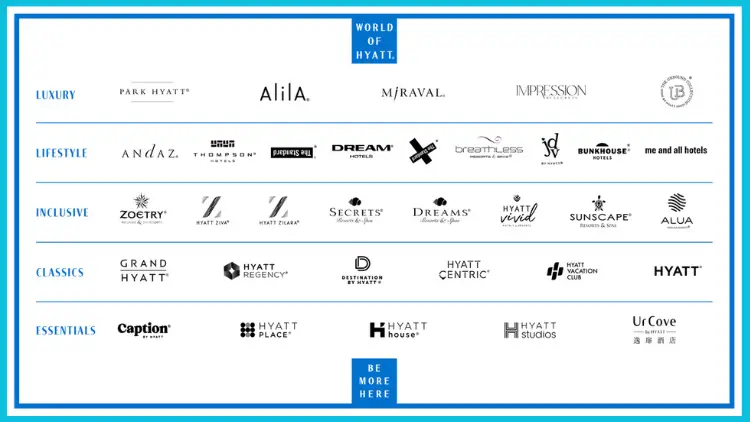
- Number of brands: 30+ brands across luxury, lifestyle, inclusive, classic, and essentials portfolios.
- Annual revenue: Hyatt reported approximately $3.7 billion in total revenue in the second quarter of 2026 and approximately $7.2 billion in the first half of 2026. Net income attributable to Hyatt Hotels Corporation was $110 million in the second quarter and $148 million in the first half of 2026.
- Main brands: Park Hyatt, Grand Hyatt, Andaz, Hyatt Regency, Hyatt Hotels & Resorts, Hyatt Place, Hyatt House, and Secrets Resorts & Spas.
Who Is the Parent Company of Hyatt Hotels?
Hyatt Hotels Corporation is an American multinational hospitality company that owns and manages multiple hotel brands under the Hyatt portfolio. The Pritzker family has played an important role in the company’s development, with Thomas Pritzker having served as Executive Chairman.
World of Hyatt Elite Status Loyalty Program:
- Discoverist: Meet 10 qualifying nights, 25,000 base points or 3 meetings/events per year.
- Explorist: Meet 30 qualifying nights, 50,000 base points or 10 meetings/events a year.
- Globalist: Meet 60 qualifying nights, 100,000 base points or 20 meetings/events in one year.
Hyatt also offers an identity matching challenge that allows eligible travelers to quickly advance to their desired elite status.
Click the red button below to get Hyatt Status Upgrades, leave the traditional mode behind and upgrade directly without challenges! Select VIP Hotel Flights fast track to complete.
Related Articles:
Frequently Asked Questions About the Hyatt Hotel Brand
- Is Hyatt part of Hilton? No. Hyatt Hotels Corporation is a separate and independent hospitality company and is not part of Hilton.
- Is Hyatt part of Marriott? No. Hyatt is an independent hotel company and is not owned by Marriott International. The two companies operate separate hotel portfolios and loyalty programs.
- Is Hyatt part of Bonvoy? No. Marriott Bonvoy is the loyalty program of Marriott International, while Hyatt operates its own loyalty program, World of Hyatt. The two programs are completely separate.
Wyndham Hotels & Resorts
Wyndham Hotels is an international hotel group and one of the largest and most diversified hotel franchisors in the world. Headquartered in Parsippany, New Jersey, USA, Wyndham Hotels & Resorts operates approximately 8,400 hotels across approximately 100 countries on six continents. Its global network includes approximately 873,000 franchised and affiliated rooms across 25 hotel brands. Wyndham Rewards has approximately 138 million members worldwide.

- Hotels and Rooms: 8,400+ hotels worldwide, with approximately 873,000 franchised and affiliated rooms.
- Number of brands: 25.
- Annual revenue: Wyndham Hotels & Resorts reported net revenues of approximately $375 million in the first half of 2026 and $327 million in the second quarter of 2026. The company currently expects full-year 2026 net revenues of approximately $1.475 billion to $1.495 billion.
- Main brands: Wyndham, Ramada, Days Inn, Super 8.
Who Is the Parent Company of Wyndham Hotels?
Wyndham Hotels & Resorts is a leading American multinational hotel franchising company headquartered in Parsippany, New Jersey. It operates one of the world’s largest hotel franchise networks, with a diverse portfolio of hotel brands serving different market segments.
Wyndham Rewards Program:
Wyndham Rewards is Wyndham Hotels’ global loyalty program that offers members rewards points, free nights, room upgrades, and more. This program is suitable for travelers seeking a cost-effective and flexible exchange.
- Blue (Regular Member): Free registration, no challenge required.
- Gold: Stay 5 nights in a calendar year.
- Platinum: Stay 15 nights in a calendar year.
- Wyndham Diamond: 40 nights in a calendar year.
Related Articles: How to Get Wyndham Diamond Status Quickly.
Frequently Asked Questions About the Wyndham Hotels & Resorts Brand
- Is Wyndham part of Marriott? No. Wyndham Hotels & Resorts is a separate and independent hospitality company and is not part of Marriott International or Hilton.
Accor Hotels
Accor SA is a French multinational hospitality company that operates and franchises hotels, resorts, and other hospitality properties. It is one of the largest hotel groups in Europe, with a diverse portfolio spanning luxury, lifestyle, premium, midscale, and economy hotels. The group has significantly expanded its global presence through both organic growth and strategic acquisitions, building a portfolio that includes well-known brands such as Fairmont, Raffles, Sofitel, and Swissôtel. At the same time, guests can enjoy a comprehensive lifestyle experience through the ALL Accor loyalty program, which combines hotel stays with a wide range of travel and lifestyle benefits.

Hotels and Rooms: 5,800+ hotels worldwide, with 880,000+ rooms across 110+ countries.
Number of brands: 45+
Annual revenue: €5.639 billion in full-year 2025. Accor reported €2.760 billion in revenue for the first half of 2026.
Major brands: Raffles, Fairmont, Sofitel, ibis
Who Is the Parent Company of Accor?
Accor is a French multinational hospitality company that owns, manages, and franchises hotels, resorts, and vacation properties. It is one of the world’s leading hotel operators and the largest hotel operator in Europe.
Accor Live Limitless plans:
Accor Live Limitless (ALL) has several classes, each with different benefits. It has five classes. They are classic members, silver card members, gold card members, platinum members, and diamond members.
Here’s how you get each level:
- Classic Membership: Accor Live Limitless gives you Classic membership.
- Silver Card members: From 10 nights or 2,000 status points (i.e., spend 800 euros), stay to get 24% bonus points.
- Gold Card members: 30 nights or 7,000 status points (i.e., spend 2,800 euros), stay and get 48% bonus points.
- Platinum Membership: 60 nights or 14,000 status points (cost €5,600), 76% bonus points for stay.
- Diamond Membership: 26,000 status points (cost €10,400) and 100% bonus points for stays.
Related Articles:
- Fast Track Your Way to Accor Platinum Status
- How to Fast Track to Accor Gold Status
- Accor Live Limitless: Ultimate Guide to ALL Membership
InterContinental Hotels Group (IHG)
InterContinental Hotels Group (IHG) is a global hospitality company that operates hotels through franchising, management, and ownership. Founded in 1946 with the launch of the InterContinental brand by Pan Am founder Juan Trippe, IHG has grown into one of the world’s leading hotel companies. Its portfolio spans luxury, lifestyle, premium, essentials, and suites brands, offering accommodation options for a wide range of travelers. Guests can also benefit from IHG One Rewards, one of the world’s largest hotel loyalty programs, which provides members with points, elite status benefits, and other rewards across IHG’s global hotel portfolio.
- Hotels and rooms: 7,100+ hotels worldwide, with more than 1 million rooms across 100+ countries.
- Number of brands: 21.
- Annual revenue: $5.189 billion in total revenue for full-year 2025. In the first half of 2026, IHG reported $2.659 billion in total revenue.
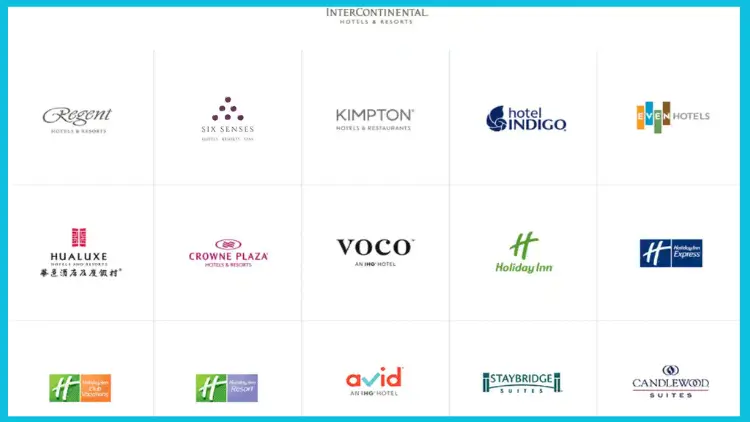
- Major brands: InterContinental, Kimpton, Holiday Inn, EVEN Hotels
Who Owns the IHG Hotel Brands?
InterContinental Hotels Group (IHG) is a global hospitality company headquartered in the United Kingdom. It owns and operates a diverse portfolio of hotel brands across the world.
IHG One Rewards Program:
The IHG One Rewards program is divided into four levels (plus club membership, which is automatically earned by signing up for the IHG Rewards program).
- Club: Just sign up.
- Silver Elite: 10 elite qualifying nights.
- Gold Elite: 20 elite qualifying nights or 40,000 elite qualifying points, per calendar year.
- Platinum Elite: 40 elite qualifying nights or 60,000 elite qualifying points, per calendar year.
- Diamond Elite: 70 elite qualifying nights or 120,000 elite qualifying points, per calendar year.
Related Articles:
Frequently Asked Questions About the IHG Hotel Brand
- Is IHG the same as Hilton? No. IHG is a separate global hospitality company from Hilton and operates its own portfolio of hotel brands, including InterContinental, Holiday Inn, and Kimpton.
- What does IHG stand for? IHG stands for InterContinental Hotels Group, the former corporate name associated with the company’s global hotel portfolio and its flagship InterContinental brand.
GHA Discovery (Global Hotel Alliance)
Global Hotel Alliance (GHA) is a global alliance of independent hotel brands, bringing together a diverse collection of hospitality companies under the GHA DISCOVERY loyalty programme. Founded in 2004, GHA was created to help independent hotel brands expand their global reach while maintaining their individual identities. GHA DISCOVERY was launched in 2010, allowing travelers to earn and redeem rewards across participating brands through a single loyalty programme. Today, GHA has grown into the world’s largest alliance of independent hotel brands, offering members access to a broad portfolio of hotels, resorts, and lifestyle experiences around the world.

Hotels and Rooms: 1,000+ hotels worldwide across 100 countries, plus 30,000+ vacation homes.
Number of brands: 55.
Annual revenue: GHA DISCOVERY generated approximately $3.2 billion in total hotel revenue in full-year 2025. In Q1 2026, total hotel revenue reached $921 million.
Main brands: Kempinski, Anantara, Pan Pacific, PARKROYAL
Who Owns GHA DISCOVERY?
Global Hotel Alliance (GHA) is a global alliance of independent hotel brands rather than a single hotel company. Founded in 2004, GHA operates the GHA DISCOVERY loyalty program, bringing together dozens of hotel brands across more than 100 countries. Unlike traditional hotel groups, GHA does not own all of the participating hotel brands; instead, it provides a shared loyalty platform that connects independent hotel companies and their properties.
GHA Discovery Program
Designed for travelers who prefer independent luxury. The GHA Discovery Program departs from traditional programs. GHA Discovery focuses on recognition-based award room upgrades. and the program has four elite levels: Silver worldwide. The program has four elite levels: Silver, Gold, Platinum, and Titanium. The higher the level, the more exclusive privileges are unlocked. The higher the level of membership, the more exclusive benefits you can enjoy. Members also earn DISCOVERY Dollars (D$), a cash-back currency that can be redeemed for accommodation and meals. and spa services at participating hotels. Here’s what the plan says:
- Silver: Join and get, no challenge.
- Gold: Stay 2 times or spend $1,000
- Platinum: Stay 10 nights, spend $5,000, or stay at 2 brands
- Titanium: Stay 30 nights, spend $15,000, or stay at 3 brands
Related Articles: GHA Discovery Fast Track to Titanium.
Radisson Hotel Group
Radisson Hotel Group is an international hotel group with a strong presence across Europe, the Middle East, Africa, and Asia Pacific. The group traces its roots to the Radisson brand and has grown into a global hospitality company offering hotels across luxury, lifestyle, upscale, midscale, and resort segments. Since 2018, Radisson Hotel Group has been part of Jin Jiang International, and today it continues to expand its global portfolio through new hotel openings, strategic partnerships, and development agreements.
- Hotels and Rooms: Radisson Hotel Group has more than 1,640 hotels in operation and under development, with more than 259,770 rooms across 100+ countries and territories.
- Number of Brands: 10 distinctive hotel brands covering luxury, lifestyle, upscale, midscale, and other segments.
- Annual Revenue: Radisson Hotel Group does not publicly report annual revenue in the same way as listed hotel companies such as Marriott, Hilton, or IHG. Therefore, it is more accurate to omit a standalone annual revenue figure rather than use an unverified estimate.
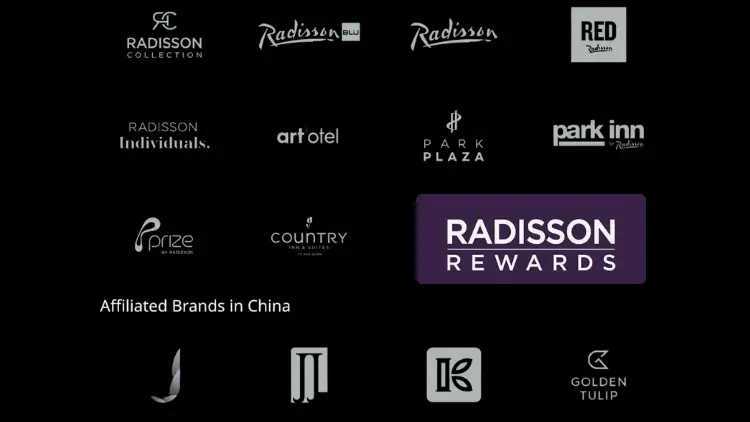
- Major Brands: Radisson Collection, Radisson Blu, Radisson, Radisson RED, Radisson Individuals, Park Plaza, Park Inn by Radisson, Country Inn & Suites by Radisson, Prize by Radisson, and art’otel.
Who Is the Parent Company of Radisson Hotels?
Radisson Hotel Group is a global hospitality company headquartered in Brussels, Belgium. Since 2018, Radisson Hotel Group has been part of Jin Jiang International, one of the world’s largest hospitality groups. Radisson Hotel Group operates and franchises a diverse portfolio of hotel brands across more than 100 countries and territories.
Radisson Rewards Loyalty Program:
Radisson Rewards is Radisson Hotel Group’s global loyalty program, offering three membership levels: Club, Premium, and the highest tier, VIP. Members can earn points on eligible stays and enjoy benefits such as member-only rates, room upgrades, and other hotel privileges.
- Club: Entry-level membership with no stay or night requirement.
- Premium: Requires 5 eligible nights or 3 eligible stays within a 12-month qualification period.
- VIP: Requires 30 eligible nights or 20 eligible stays within a 12-month qualification period. VIP members receive benefits including free breakfast for two, room upgrades subject to availability, exclusive VIP access at selected hotels, and a 24-hour VIP Contact Center.
How to Choose the Right Hotel Loyalty Program?
Choosing the right hotel loyalty program depends on where you usually stay, how often you travel, and which benefits matter most to you.
- Marriott Bonvoy: A strong choice for travelers who want a large global hotel portfolio, extensive luxury options, and valuable elite benefits such as room upgrades and, at qualifying brands, breakfast.
- Hilton Honors: Ideal for frequent Hilton guests who value elite perks such as complimentary breakfast for eligible members, room upgrades, and a broad selection of properties worldwide.
- IHG One Rewards: A good option for travelers who frequently stay at brands such as InterContinental, Kimpton, and Holiday Inn and want flexible ways to earn and redeem points.
- World of Hyatt: Particularly attractive for travelers who prioritize high-value elite benefits, luxury hotels, suite upgrades, and a more rewarding experience at higher elite tiers.
- Wyndham Rewards: A practical choice for travelers who prefer a large network of hotels, especially in the midscale and economy segments, with a simple rewards structure.
- ALL – Accor Live Limitless: Worth considering if you frequently stay at Accor brands such as Raffles, Fairmont, Sofitel, and ibis and want to combine hotel stays with a broad range of lifestyle rewards.
- Radisson Rewards: A good fit for travelers who regularly stay at Radisson brands and want benefits such as member rates, room upgrades, breakfast at the VIP level, and other elite privileges.
- GHA DISCOVERY: Different from traditional hotel loyalty programs, GHA DISCOVERY connects multiple independent hotel brands. It can be especially useful for travelers who want access to a diverse portfolio of luxury and lifestyle hotels while earning and using D$ across participating brands.
Ultimately, there is no single best hotel loyalty program for everyone. The best choice is the program that matches your preferred hotel brands, destinations, travel frequency, and the elite benefits you are most likely to use.
What Makes a Hotel Brand Stand Out?
Choosing the right hotel loyalty program is important, but a great hotel brand offers more than just points and elite benefits. The strongest brands usually stand out through a combination of service, location, technology, sustainability, reputation, and the overall guest experience.
1. Exceptional Guest Service
Great service is one of the most important factors behind a successful hotel brand. Friendly staff, personalized attention, and consistent service can turn an ordinary stay into a memorable experience and encourage guests to return.
2. Great Locations
Location can make a major difference to the guest experience. Leading hotel brands often have properties in convenient locations near business districts, airports, popular attractions, beaches, or other major destinations.
3. Valuable Loyalty Programs
A strong loyalty program gives guests a reason to stay with the same brand again. Benefits such as room upgrades, free breakfast, late checkout, bonus points, and member-only rates can add significant value for frequent travelers.
4. Modern Technology
Technology is becoming an increasingly important part of the hotel experience. Mobile check-in, digital room keys, hotel apps, and personalized services can make stays more convenient while helping hotels better understand and serve their guests.
5. Sustainability
Many leading hotel brands are also placing greater emphasis on sustainability. Energy-efficient operations, water conservation, waste reduction, and support for local communities can help hotels reduce their environmental impact while appealing to environmentally conscious travelers.
6. Strong Reputation
A hotel brand’s reputation is built through consistent quality and positive guest experiences. Good reviews, strong customer service, clean rooms, and reliable standards can help a brand earn trust and attract repeat customers.
7. Complete Guest Experience
The best hotel brands offer more than a comfortable room. Quality restaurants, bars, spas, fitness facilities, entertainment, and unique local experiences can make the entire stay more enjoyable and give guests more reasons to choose the brand again.
Ultimately, the best hotel brand is not necessarily the one with the most properties or the biggest loyalty program. It is the one that consistently delivers the combination of service, value, convenience, and experiences that best matches what its guests are looking for.
Future Trends in the Hotel Industry
With the progress of science and technology, and the improvement of people’s consumption level. More and more people yearn for travel, and accommodation has become an indispensable demand for people. The hotel industry is also moving forward with various upgrades to intelligence, personalization, and digitalization. and loyalty programs. The future trends of the hospitality industry in Europe. The United States and the world are undergoing profound changes, from post-pandemic recovery to technology-driven. Sustainable development and market structural change. The following is a core trend analysis based on the latest industry dynamics:
Digital personalized transformation and deep application of artificial intelligence.
In the future development trend of hotels, personalized services will evolve from standardization to customization. And artificial intelligence will be deeply applied in hotels. If you have any needs, you can choose an intelligent AI receptionist to serve you. There will be a large number of smart devices to provide personalized recommendations for guests, and there may be contactless check-in and intelligent room control in the future. In other words, we do not need to manually check in, completely rely on contactless technology, and can self-check in with, mobile room card. Smart room control, etc., such benefits can save a lot of labor costs. In this way, the hotel may have layoffs and efficiency optimization, AR devices and smart devices will assist room maintenance and so on.
2. Sustainable development has become the core competence
Global awareness of environmental protection has increased. And hotels have adopted energy-saving and emission reduction measures. such as a zero plastic policy, green building design, and renewable energy use.
The European Union requires hotels to follow LEED certification standards. and groups such as Marriott promote renewable energy (solar), smart water, and electricity management systems. and reduce single-use plastics. From locally sourced food to recycling, eco-hotels will become the new trend. Consumers may be more inclined to choose low-carbon and environmentally friendly accommodation options. According to the survey, 70% of European and American travelers are willing to pay a premium for eco-friendly hotels. pushing brands to incorporate ESG into the core of their strategy.
3. The evolution of hotel loyalty programs
Traditional points-based loyalty programs are being transformed more broadly and attractively. For example, instant rewards, experiential benefits, cross-brand points exchange, etc., so that members enjoy more diversified rights and interests, improve stickiness and loyalty.
4. The growth of boutique and lifestyle hotel brands
With the trend of young people, many have bid farewell to traditional luxury hotels. opting instead for hotels like millennials and Gen Z, who prefer unique design. personalized service and local cultural experiences. Many young people also like to share their accommodation experience through social interaction. which is why modern popular design and boutique hotels are popular among young people, perhaps because they are more suitable and closer to life. Because they all emphasize social Spaces, artistic design. and localized experiences to meet the needs of a new generation of travelers like us.
5. Geoeconomic and regional market differences
As a result of the uneven recovery in Europe. Southern Europe (Spain, Portugal) benefited from the growth of dollar tourists. forcing hotels to introduce flexible cancellation policies and extended stay packages. Coupled with increased competition in the Asia-Pacific region, the potential of China’s business travel market ($370 billion in 2024) attracts international brands to localize. But internal volume leads to price wars.
The hotel industry in Europe and the United States is moving from scale to “intensive farming”, and technology, environmental protection, and differentiated experience will be the next stage of the winners and losers.
Related Articles:
- Discover 10+Best Marriott in Orange County
- Top 10+ Best Hilton Hotels in Florida for 2025
- Best Hilton in Paris Flyertalk for 2025
- Tybee Island VS Hilton Head: Which is Better?
- Hilton Garden Inn VS Doubletree: Which is Better?
- Best Hilton Hotels in US For 2025
- Which are the largest hotel chain in the world in 2025?
- Best Marriott Resorts in US
- Best Hilton Hotels in the US For 2025
- Best Hilton Hotel in NYC With Honors Perks
- Best Hilton in Hawaii
FAQ
What is the most popular hotel brand in the UK?
The best hotel in the UK in 2025 is Premier Inn, as its popularity has exceeded 90%. Among them,
Holiday Inn and Travelodge tied for second place as both were approved by 89% of Internet respondents in the UK.
What are the top 5-star hotels in the world?
Top rated luxury hotels in the world:
1. The Venetian Resort in Las Vegas
2. Bellagio
3. The Palazzo at the Venetian
4. Trump International Hotel Las Vegas
5. ARIA Resort and Casino
6. The Palace Hotel San Francisco is one of the luxury Collection hotels
7. Metropole Las Vegas
8. Wynn Las Vegas
9. And more…
What are the 4 stars hotel brands?
Top 4 star hotel:
1. The last city in the Novotel Mecca.
2. Ramada Wyndham Manama City Centre.
3. Holiday Inn Dubai Business Bay (IHG).
4. Mercure Hotel Suites & Apartments Dubai Basa Heights.
5. Elite Resort & Spa.
6. The Cumberland Hotel London.
7. The Emerald Hotel.
8. Aloft Dhahran.
How can hotels use loyalty programs to increase brand impact?
Hotels can enhance brand influence by utilizing loyalty programs. which rely on personalized service, exclusive benefits. and long-term membership relationships to keep customers loyal. Through various welfare rewards, redemption. and upgrading, not only can it attract new customers, but also keep old customers. Also, some hotels have combined digital tools, such as APP personalized recommendations and AI intelligent customer service. so that tourists deepen their impression of the hotel, as well as experience the services and awareness. In short, a perfect loyalty program can not only improve customer satisfaction but also help some hotels build a better hotel brand image. thereby enhancing market competitiveness and promoting the development of various hotels.
Conclusion
In conclusion, from the above description, whether you are traveling for business, leisure, or looking for cost-effective accommodation. global hotel brands can meet the needs of different travelers. From luxury palaces to stylish boutique hotels to convenient and affordable accommodation. each brand has its unique positioning and characteristics. Whether you choose your favorite Hotel Brands or some Hotel chains. this guide will allow you to quickly find the right hotel for you among the many options. No matter where you are in the world, you can enjoy an unforgettable stay. Also, regardless of which Hotel you choose in this article, if you don’t want to take the traditional challenge mode. here I recommend the shortcut – VIP Hotel Flights. It takes the challenge away! Quickly upgrade your desired elite rank status. Save you a lot of time and money.


